Scrum.org vs Scrum Alliance vs PMI: Who Wins?
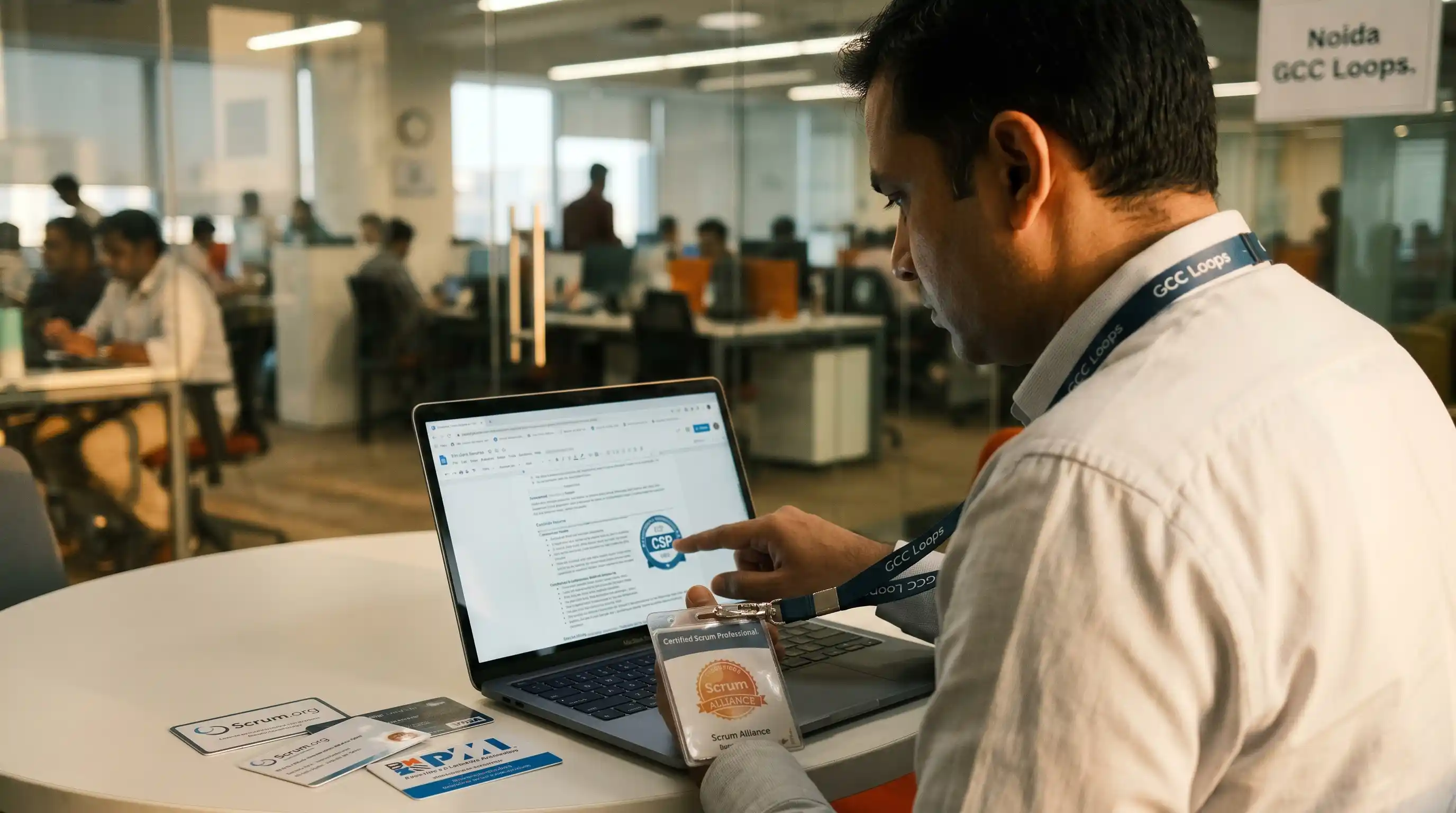
- Scrum.org Leads on Rigor: Lifetime certification validity combined with strict, un-cheatable assessments creates an exceptionally high recruiter trust signal.
- Scrum Alliance Focuses on Network: While training-dependent and requiring recurring fees, its massive global alumni ecosystem remains highly visible in legacy filters.
- PMI Targets Governance: Ideal for enterprise PMO frameworks, though it can run the risk of signaling rigid, traditional waterfall compliance to modern startup engineering teams.
- ICAgile Prioritizes Discovery: Its knowledge-based, exam-free architecture makes it an excellent match for adaptive product experimentation tracks.
The best agile certification body isn't the loudest brand. Scrum.org, Scrum Alliance, ICAgile and PMI don't carry equal weight—see the ranking.
When mapping out your long-term upskilling matrix alongside modern AI product leadership certifications, selecting the wrong foundational ecosystem can dilute your market authority.
Every credentialing body approaches delivery frameworks from fundamentally distinct operational philosophies. Let’s look at the raw data to determine which standard clears recruiter filters for senior technical roles.
The Credibility Matrix: Choosing the Best Agile Certification Body
Selecting the best agile certification body requires analyzing candidate requirements across corporate tech firms and Global Capability Centres (GCCs). The market remains sharply divided between exam-centric rigor and community-centric networks.
Scrum.org: The Lifetime Rigor Approach
Founded by the co-creator of Scrum, Scrum.org positions itself as the strict technical standard. It completely decouples the training course from the examination process. You can purchase an exam attempt directly without ever sitting through a mandatory lecture.
Because the passing threshold sits at a demanding 85%, recruiters recognize that a Scrum.org badge indicates genuine domain comprehension.
Scrum Alliance: The Training-Driven Network
Scrum Alliance is the oldest and largest certification provider in the agile landscape. Its operational model mandates that you attend a live, synchronous course led by a Certified Scrum Trainer (CST). The final exam is historically less rigorous than its competitors.
However, its immense footprint means it is frequently hardcoded into automated resume filtering software used by global human resource departments.
Corporate Giants and Modern Ecosystems: ICAgile vs PMI
As product deployment cycles adapt to handle complex technical pipelines, alternative certification bodies have carved out significant enterprise value.
ICAgile: Knowledge-Based Pathway Over Exams
ICAgile shifts the focus entirely away from standardized multiple-choice testing. It serves as an accreditation body that verifies university and corporate training syllabi against a progressive learning arc. Certifications are awarded based on active, instructor-verified participation in practical labs.
This methodology makes it highly popular for modern product discovery tracks that resist rigid test frameworks.
PMI: The Enterprise Governance Standard
The Project Management Institute (PMI) is the global benchmark for traditional corporate governance. Its agile offering, the PMI-ACP, requires verified professional experience hours before you can even sit for the test.
| Body | Mandatory Training | Pass Score | Renewal Fees | Credential Status |
|---|---|---|---|---|
| Scrum.org | No | 85% | No | Lifetime |
| Scrum Alliance | Yes | 74% | Yes (2 Yr) | Expires |
| PMI | Yes | Scaled | Yes (3 Yr) | Suspended |
| ICAgile | Yes | Practical | No | Lifetime |
While highly respected in traditional industries, relying solely on PMI frameworks can occasionally flag you as an administrator rather than an active builder in fast-paced software loops.
To understand how these broad delivery frameworks intersect with specific leadership titles, read our strategic guide on choosing a product manager vs product owner certification path.
The Financial Reality: Total Cost of Ownership and Renewal Fees
A major differentiator in agile certification comparison is the long-term financial maintenance required to keep your profile active. The hidden cost of ownership can severely degrade your personal certification body credibility if you let your credentials lapse. Expired badges signal an inactive professional trajectory to eagle-eyed talent acquisition teams.
AI Adaptation: Which Certifying Body Governs the Intelligent Backlog?
The integration of agentic workflows has disrupted traditional software cadence. Modern teams require frameworks that accommodate prompt experimentation, continuous model tuning, and data pipeline latencies.
Historically, professional development institutions relied on static, multi-year curriculum cycles. Today, bodies like ICAgile are iterating their curriculums rapidly, while exam-centric bodies like Scrum.org rely on the immutable principles of empirical process control to navigate AI volatility.
Conclusion & Next Steps
Do not choose an agile ecosystem based on corporate habit. If you require lifetime value, low maintenance costs, and high technical authority, target Scrum.org. If you are navigating traditional corporate environments that mandate structured contact hours, align with PMI or Scrum Alliance.
Map your training budget against the exact operational culture of your target employers to maximize your real-world return on investment.

Frequently Asked Questions (FAQ)
Scrum.org and ICAgile currently offer the highest structural utility for product leaders. Scrum.org builds clear technical credibility through its rigorous testing, while ICAgile focuses heavily on adaptive product discovery and continuous experimentation frameworks.
Scrum.org is highly respected by engineering leads and technical product directors due to its demanding 85% exam passing threshold. Scrum Alliance holds massive baseline recognition among corporate HR teams because of its historic market dominance.
Yes, ICAgile is widely recognized by top-tier enterprise tech organizations and consulting firms. Recruiters value its structured, milestone-based learning tracks, making it a common qualification in modern, cross-functional engineering cultures.
PMI focuses heavily on macro-level enterprise governance, risk mitigation, and large-scale budget compliance. Pure Scrum bodies focus on cross-functional pod velocity and product delivery, making them far better suited for true software roles.
ICAgile leads on curriculum currency due to its flexible framework, which allows course creators to rapidly inject generative AI discovery modules. Traditional exam-based bodies rely on broader principles, leaving specific tooling to supplementary courses.
Scrum Alliance and PMI require recurring renewal fees and ongoing professional development credits to keep your credentials active. Scrum.org and ICAgile provide lifetime validity with a single upfront payment, requiring no future fees.
Scrum.org represents the highest value for money. By eliminating mandatory training costs and zeroing out ongoing renewal fees, it allows professionals to secure a highly respected global credential for a single exam fee.
Yes. US markets lean heavily toward hands-on shipping portfolios, whereas Indian tech hubs and GCC recruiters rely more heavily on recognized bodies like Scrum.org or PMI to efficiently filter vast applicant pools.
Scrum Alliance offers an accessible entry point for beginners because its mandatory live courses ensure a guided, collaborative learning environment, backed by an exam designed to validate foundational agile principles.
You cannot directly transfer a credential from one body to another. However, strategic stacking is highly effective. Pairing a rigorous delivery credential from Scrum.org with a modern discovery certification from ICAgile builds a comprehensive profile.